
NEWSROOM

News, insights and updates.

Company developments, technology explainers, event updates and engineering perspectives from GK Semiconductor.

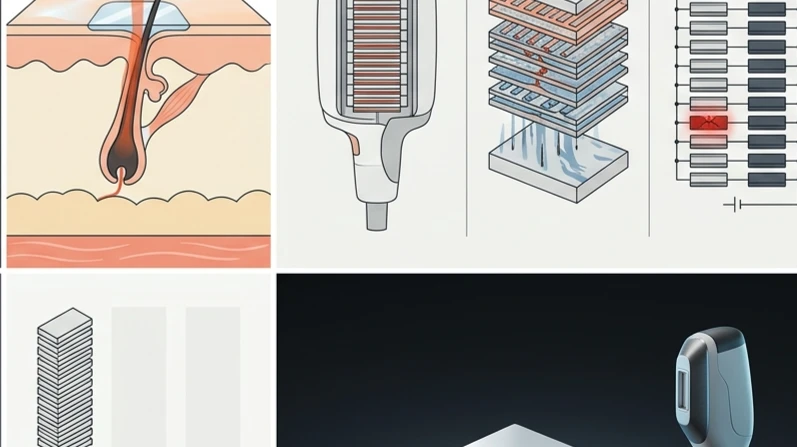
Why Have Aesthetic Laser Hair Removal Systems Surged to 4000W? A Breakdown of the Bottlenecks in Traditional 50W/100W Bar Stacking

The pursuit of 4000W ultra-high power in aesthetic hair removal is fundamentally aimed at maintaining large-spot sliding coverage while simultaneously achieving "ultra-narrow pulse widths (≤30ms) combined with high energy," so that hair follicles are destroyed instantaneously without burning the epidermis. However, the industry today relies overwhelmingly on stacking 30–40 pieces of 50W and 100W laser bars to reach high power, which directly results in handpiece net weights approaching 1 kg, excessive microchannel water resistance, and uncontrolled wavelength thermal drift. Meanwhile, the 200W bars available on the market suffer from frequent thermal stress and optical damage (COMD) and insufficient stability, making a substantive breakthrough at the level of the underlying high-power chip an urgent necessity.

Read the story
How Effective Is 1940 nm Laser Treatment for Varicose Veins
Technology Explained

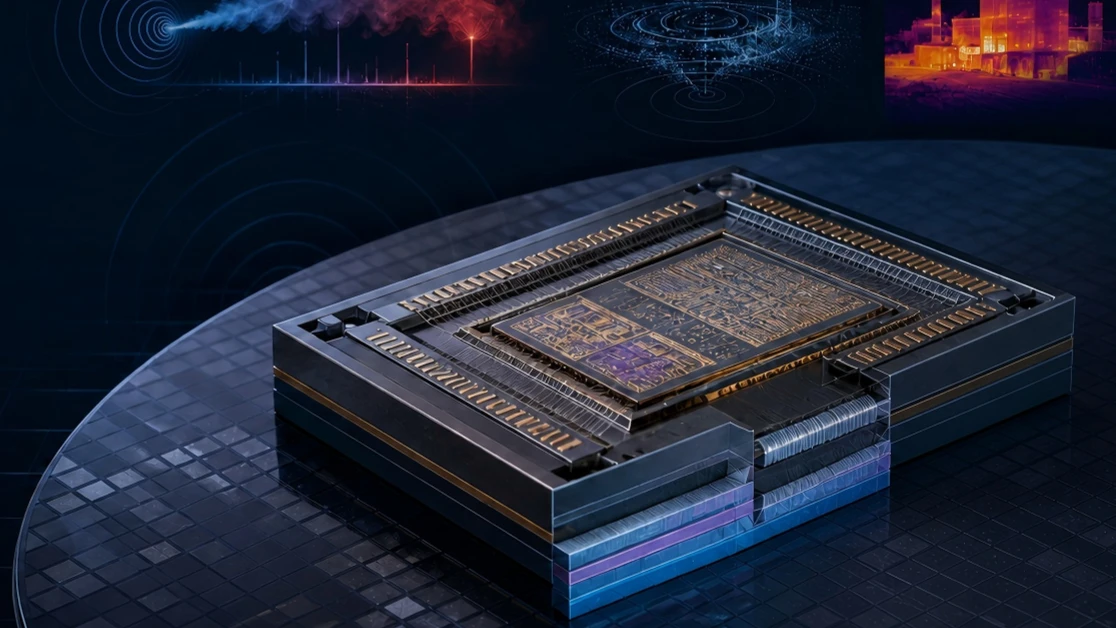
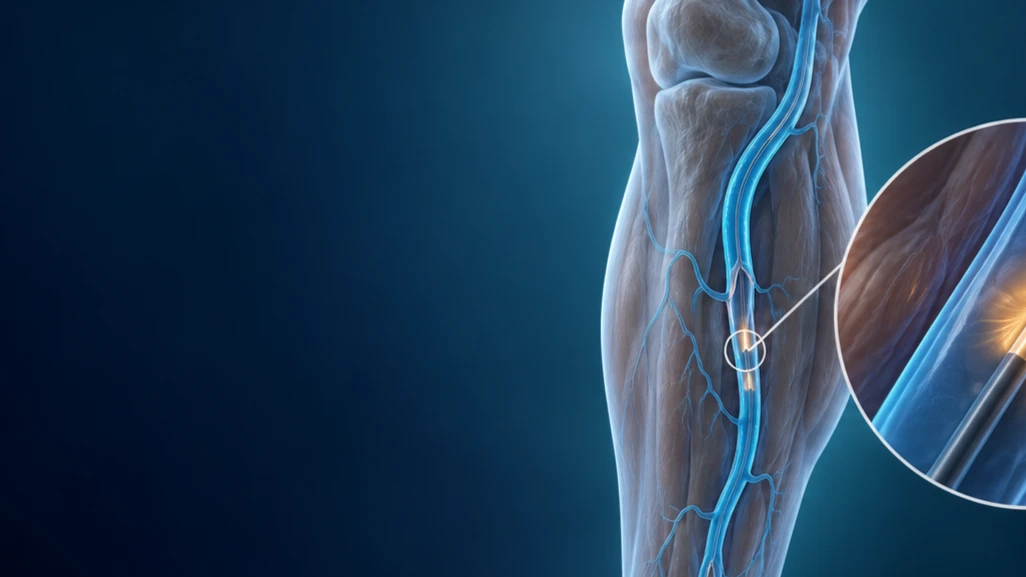
How Effective Is 1940 nm Laser Treatment for Varicose Veins

The 1940 nm wavelength is attracting interest in endovenous laser treatment (EVLT) because of its strong absorption by water. This supports localized energy deposition and treatment at relatively low power. Clinical studies have reported high vein closure rates and favorable recovery outcomes, although results depend on the device, fiber, treatment protocol, and patient selection. GK Semiconductor provides proprietary laser chips, fiber-coupled modules, and complete system development support to help medical device manufacturers develop 1940 nm EVLT platforms.

BROWSE BY CATEGORY

Latest from GK Semiconductor.

Explore company developments, technology insights and events from GK Semiconductor.

Why Have Aesthetic Laser Hair Removal Systems Surged to 4000W? A Breakdown of the Bottlenecks in Traditional 50W/100W Bar Stacking The pursuit of 4000W ultra-high power in aesthetic hair removal is fundamentally aimed at maintaining large-spot sliding coverage while simultaneously achieving "ultra-narrow pulse widths (≤30ms) combined with high energy," so that hair follicles are destroyed instantaneously without burning the epidermis. However, the industry today relies overwhelmingly on stacking 30–40 pieces of 50W and 100W laser bars to reach high power, which directly results in handpiece net weights approaching 1 kg, excessive microchannel water resistance, and uncontrolled wavelength thermal drift. Meanwhile, the 200W bars available on the market suffer from frequent thermal stress and optical damage (COMD) and insufficient stability, making a substantive breakthrough at the level of the underlying high-power chip an urgent necessity. Read article What Are Mid- and Far-Infrared Technologies and Ⅲ-V Optoelectronic Chips? Explore Ⅲ-V compound semiconductors and mid-to-far infrared optoelectronic chips, covering key breakthroughs in laser pumping, sensing, imaging, and full-chain IDM manufacturing. Read article How Effective Is 1940 nm Laser Treatment for Varicose Veins The 1940 nm wavelength is attracting interest in endovenous laser treatment (EVLT) because of its strong absorption by water. This supports localized energy deposition and treatment at relatively low power. Clinical studies have reported high vein closure rates and favorable recovery outcomes, although results depend on the device, fiber, treatment protocol, and patient selection. GK Semiconductor provides proprietary laser chips, fiber-coupled modules, and complete system development support to help medical device manufacturers develop 1940 nm EVLT platforms. Read article Why Choose 1940 nm Lasers for Varicose Vein Treatment EVLT mechanisms and proprietary semiconductor laser technology Read article