Short answer
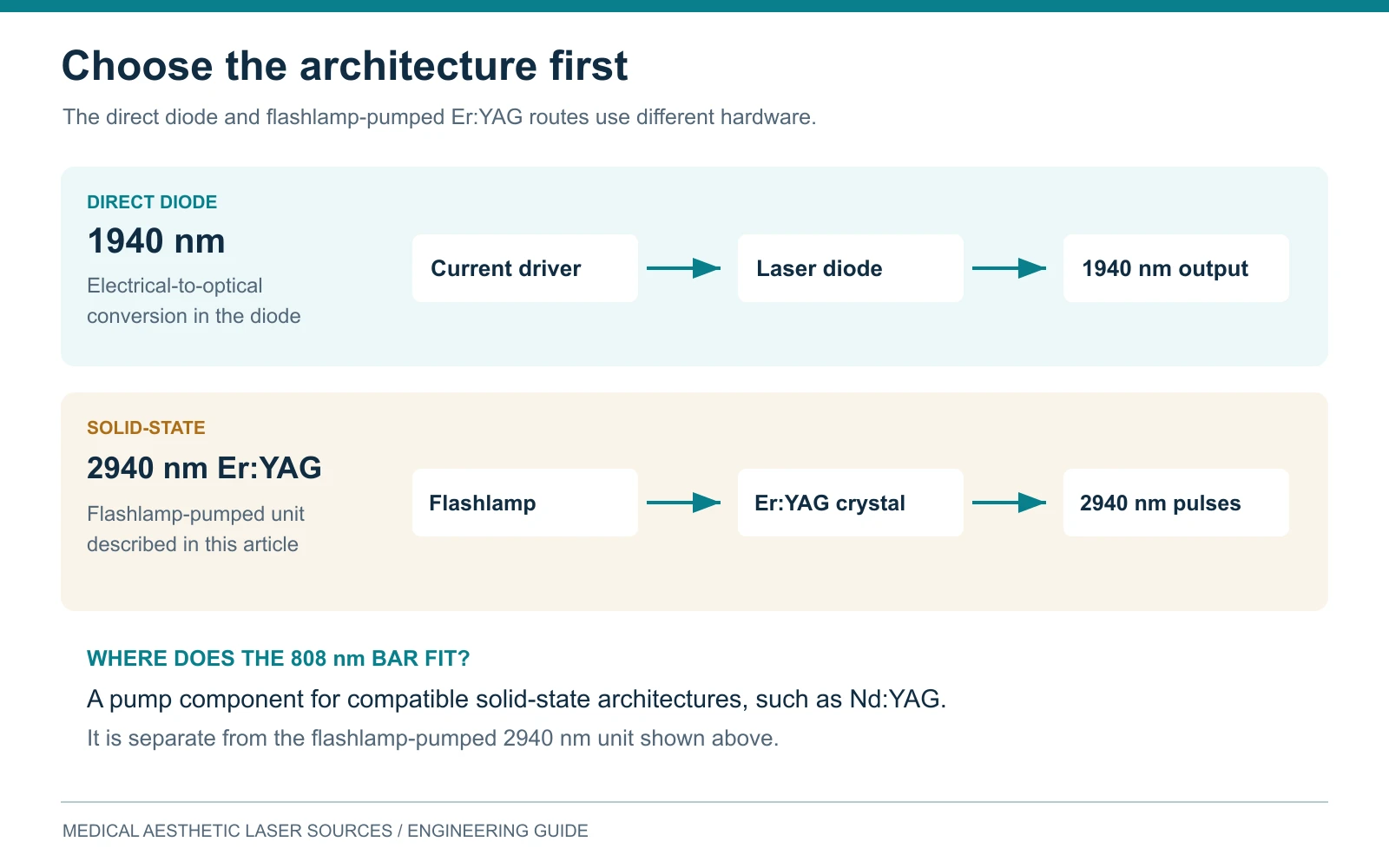
Wavelength is not the first question. Start with the architecture. There are only two: a semiconductor laser diode that emits directly, with the wavelength set by the epitaxial material, or a solid-state laser that needs a pump source to load energy into a crystal first, adding a conversion stage and a set of pump hardware. 1940 nm takes the first route, 2940 nm Er:YAG takes the second, and the 808 nm bar is the charger for the second. Operating mode (CW, QCW or pulsed) is a third variable, independent of wavelength, and it alone decides how the device delivers energy.
Questions this page answers
Direct diode versus solid-state for medical devices · why 808 nm became the default pump wavelength · what 200 mJ of pulse energy means for an Er:YAG system · how CW, QCW and pulsed differ in practice · six things to settle before requesting a quote.
1. Pick the architecture first
Every medical and aesthetic laser sits on one of two source architectures. This decision comes before wavelength because it determines the entire bill of materials around it.
Direct diode. The chip emits as soon as current flows. Wavelength is fixed by the band structure of the epitaxial material, and electrical-to-optical conversion happens in one step. This route is compact and efficient and needs no pump hardware. Its limit is single-pulse energy, which is bounded by the current density the chip can handle. The 1940 nm family sits here.
Solid-state. The crystal does not emit when powered. Energy has to be loaded in from an external source, then released by the crystal at its own wavelength. What you pay for is the pump source, the coupling optics and a full thermal management stack. What you get is energy that can be stored and released in one high-energy pulse. The 2940 nm Er:YAG sits here.
Pump sources are close to commoditised. The 808 nm semiconductor bar is the general-purpose part in this industry, and customers can usually drop it into an existing design.
Wavelength comes after the architecture is fixed. Both 1940 nm and 2940 nm fall in strong water absorption regions, where energy is deposited in the outermost layer of any water-bearing material, but the equipment format, energy class and delivery form differ substantially.
2. The 808 nm bar: the general-purpose pump part
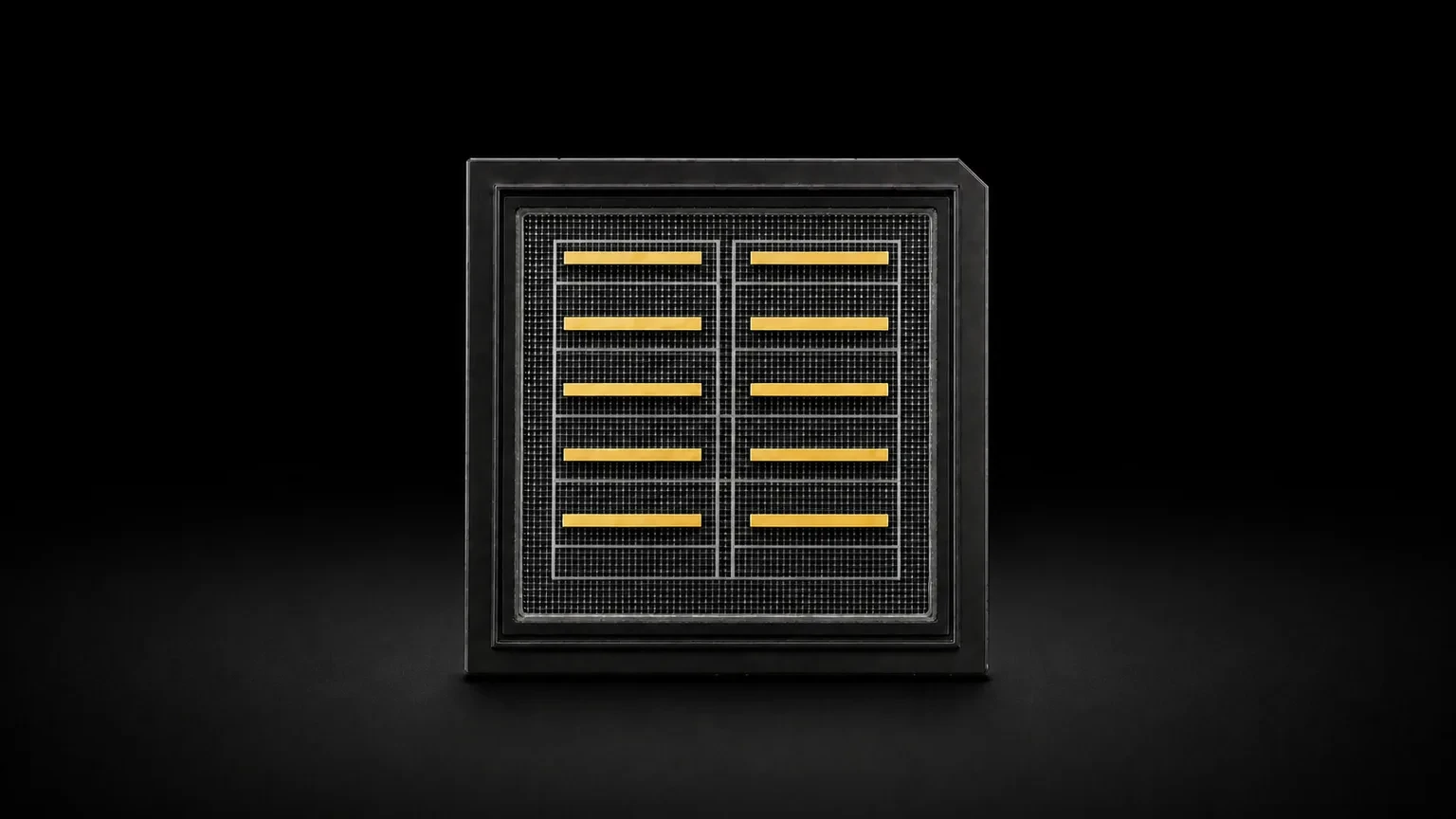 808 nm is the most widely used pump wavelength. GK Semiconductor supplies it in 50 W and 100 W grades, in bar form.
| Item | 808-50W-QCW | 808-100W-QCW |
| Output power | 50 W | 100 W |
| Number of emitters | 19 | 47 |
| Fill factor | 30% | 50% |
| Slope efficiency | 1.3 W/A | 1.3 W/A |
| Threshold current | 10 A | 20 A |
| Operating current | 50 A | 100 A |
| Operating voltage | 1.8 V | 1.9 V |
| Divergence (fast × slow axis) | 35° × 8° | 35° × 8° |
| Cavity length | 1 mm | 1.5 mm |
| Recommended operating temperature | 10 to 30 °C | 15 to 35 °C |
| Operating mode | QCW, 30 ms pulse width, 30% duty cycle | same as left |
Higher grade does not mean better value. As power goes up, so do the demands on the customer's cooling and power supply. The internal guidance is to establish what the customer's equipment can actually handle before recommending a grade rather than pushing the top one.
Three questions belong in every enquiry: how many watts, continuous or pulsed, and what equipment does it go into.
808 nm also ships as bare die and as packaged devices. The 300 mW grade exists both as bare die (GKCP-0808-300M-CW-01) and as a packaged part ready to power up (GKLD-0808-300M-01). Same specifications; the choice depends on whether the customer packages in house.
Elsewhere in the range, 780 nm serves specific pump requirements and 2700 nm pumps OPO stages. The 1270 nm fiber-coupled modules come in 15 W and 30 W grades with SMA905 terminated fiber, which simplifies optical layout for system integrators.
3. 1940 nm: the mainstay of the direct diode route
1940 nm lies in a strong water absorption region, so energy is deposited in the outer layer of the irradiated material. This series ships in three integration levels built on the same chip: single emitter, bar, and module.
Single emitters come in 1 W, 1.5 W and 2 W grades on aluminium nitride ceramic submounts with a gold-plated finish, combining electrical isolation with heat spreading. They suit power-modest, size-constrained designs.
The bar version is represented by GKBAR-1940-10W-CW-17: 10 W continuous, 19 emitters, 30% fill factor, 8 nm spectral width, 0.25 W/A slope efficiency, 5 A threshold, running at 45 A and 1.4 V over 15 to 35 °C.
The module version is GKDZ-1940-050W-A7. Six bars sit side by side at 2.5 mm pitch to deliver 50 W continuous in a water-cooled package, 13 nm spectral width, operating at 40 A and 1.6 V. Module-level delivery removes the assembly step from the customer's floor and takes that yield risk with it.
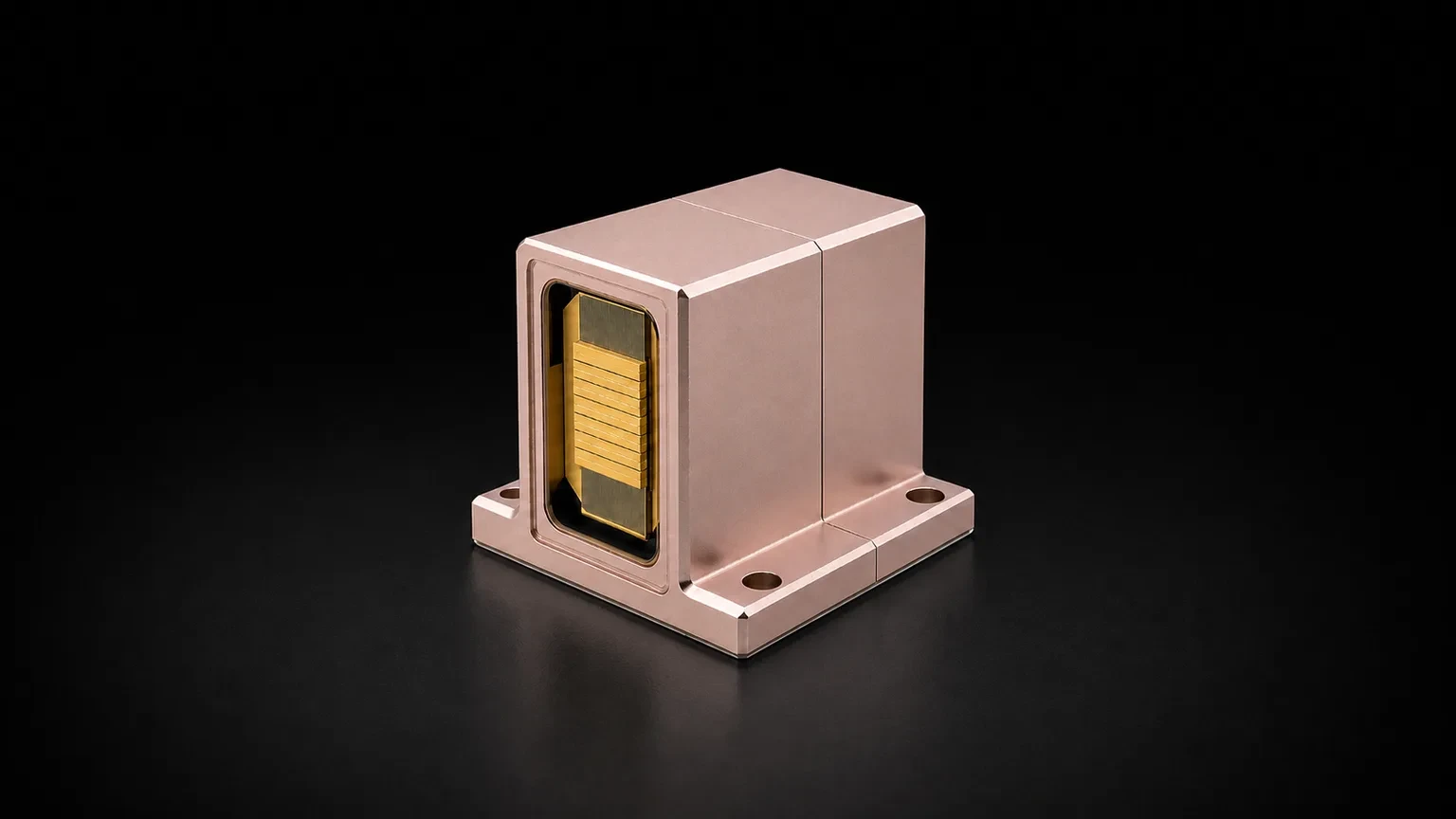
Cooling parameters need separate sign-off. Water pressure, water temperature and flow rate on this module are confirmed item by item against each project before any number goes to a customer. Catalog figures are not a commitment.
4. 2940 nm Er:YAG: solid-state delivered as a system
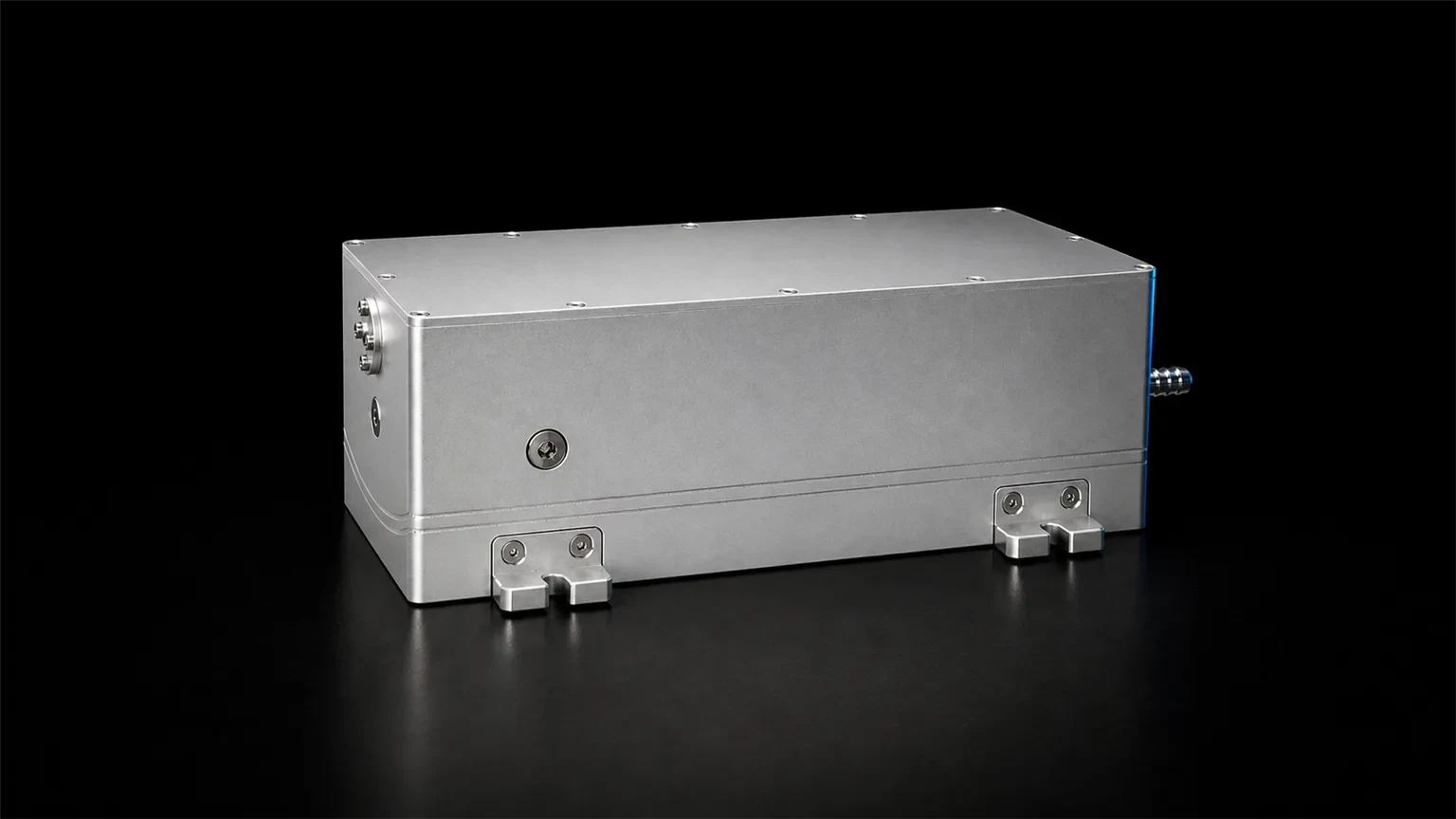
2940 nm sits where water absorption is stronger still. The GK Semiconductor 2940-200mJ is a flashlamp-pumped Er:YAG solid-state laser delivered as a complete unit with laser head and dedicated power supply.
| Item | Value |
| Wavelength | 2940 nm |
| Energy per pulse | 200 mJ |
| Average output power | 10 W |
| Pulse width | adjustable, 100 to 1500 ns |
| Energy stability | better than 5% |
| Beam mode | multimode |
| Composition | laser head plus custom power supply |
| Laser head dimensions | 300 × 120 × 104 mm |
Energy stability has a plain meaning in equipment terms: the smaller the shot-to-shot variation, the more uniform the output. Delivering as a complete unit means no power supply design on the customer side, and output fiber, articulated arm and chiller are available as options, shortening the integration cycle.
Against 1940 nm, the 2940 nm route organises energy differently. The 1940 nm diode turns electrical power into continuous optical output. The 2940 nm Er:YAG stores energy in the crystal first and releases it as one high-energy pulse. Where a single high-energy shot is required, the diode route cannot supply that pulse and solid-state is the only answer.
5. CW, QCW and pulsed: the third variable
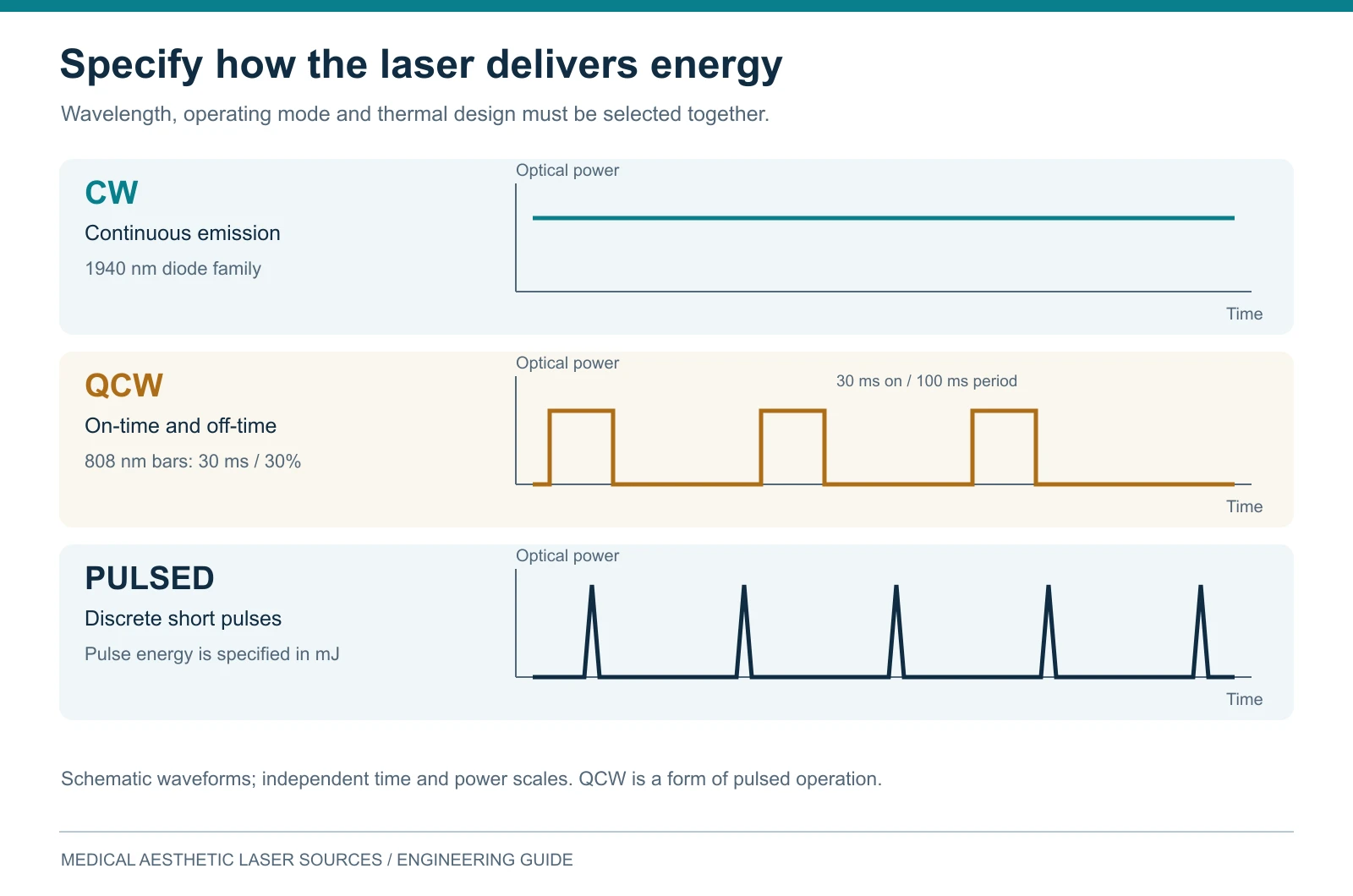
Operating mode is independent of wavelength, and it is the item most often missing from an enquiry. Get it wrong and the power figure on the datasheet tells you nothing usable.
| Mode | Meaning | Typical fit | GK Semiconductor format |
| CW | Continuous emission | Applications that need light present continuously to transmit data or measure concentration | 1940 nm 1/1.5/2 W and 50 W module, 808 nm 300 mW device |
| QCW | On for a short interval, then off, spreading heat by duty cycle | Pumping and processing where average power and thermal load must be balanced | 808 nm 50 W / 100 W bars, 30 ms pulse width, 30% duty cycle |
| PL | Short flashes with high instantaneous peak and low average heating | Ranging and lidar, which work by timing the return | 905 nm pulsed chip series |
The logic is not complicated. Continuous suits communications and gas sensing, which need uninterrupted light. Ranging and lidar measure by timing the return, so they must pulse. Where you want meaningful average power but the thermal budget is tight, QCW spreads the heat through duty cycle.
Write the mode into the enquiry. Wavelength and power alone leave too much open for a supplier to size cooling and power supply correctly.
One more concept gets muddled regularly. Light beyond 1400 nm is absorbed by the moisture in front of the retina before reaching it, so permissible exposure is substantially higher than in the 800 to 1000 nm range, and this window is called the eye-safe band. That is not the same as safe. "Harmless to shine in the eye" is not a statement anyone should make. The final safety classification belongs to the finished equipment.
6. Six things to settle before asking for a quote
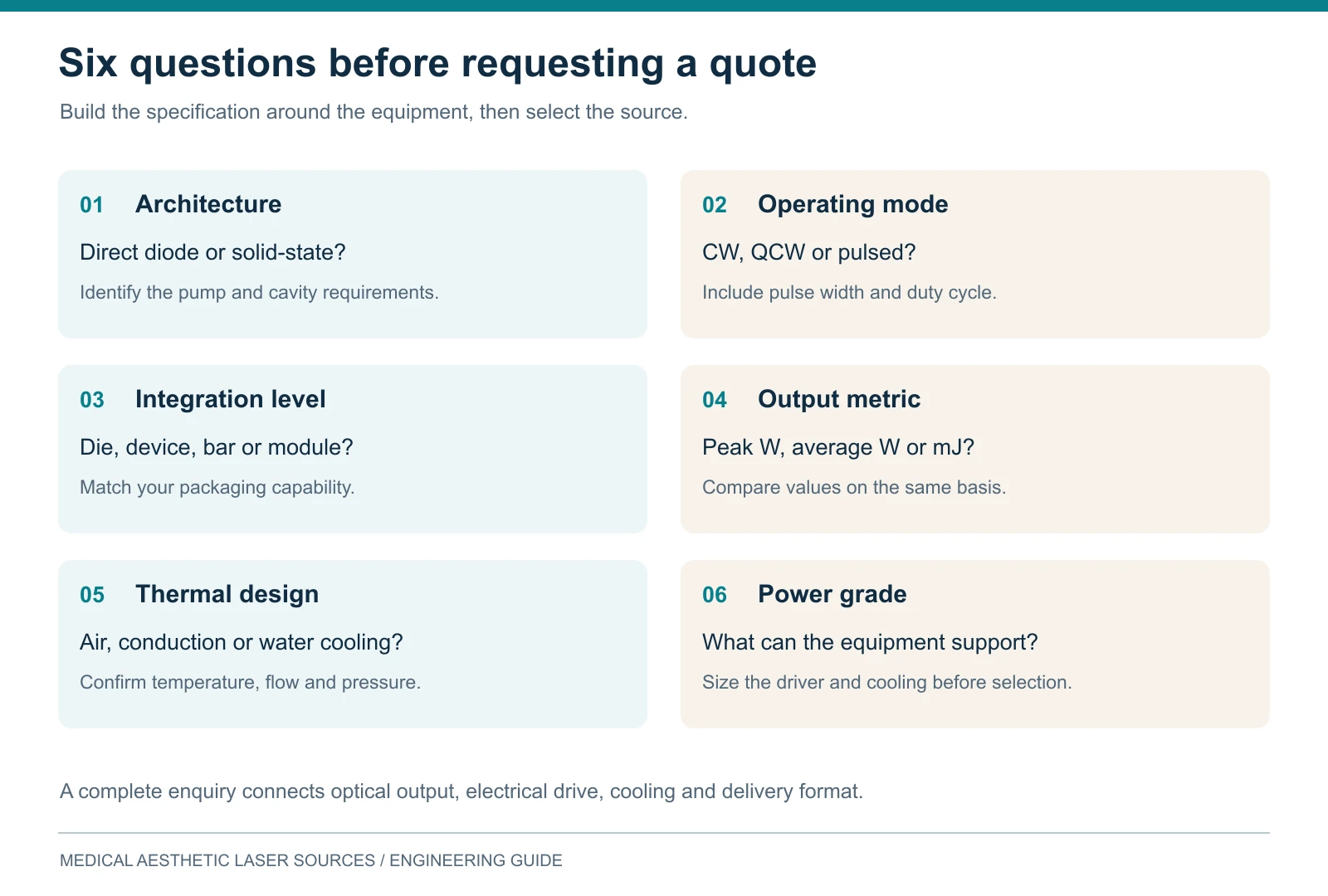
1. Which architecture?
Direct diode, or solid-state with a pump source. This sets every downstream item and comes before wavelength.
2. CW, QCW or pulsed?
Wavelength and power are not enough. Pulse width and duty cycle belong in the enquiry, otherwise nobody can size the cooling or the power supply.
3. Die, device or module?
Bare die gives the most freedom to anyone with packaging capability; devices and modules remove that step. All three 1940 nm formats are available, matched to the customer's production capability.
4. Peak power, average power, or energy per pulse?
The 808 nm bars are specified as output power under QCW conditions. The 2940 nm unit is specified as 200 mJ per pulse. Different units, so convert to a common basis before comparing.
5. Is the thermal approach decided?
Air, conduction or water cooling determines module size and lifetime. Water pressure, temperature and flow rate need to be confirmed item by item.
6. Was the power grade chosen against actual equipment capability?
Higher grades demand more from cooling and power supply. Establish what the customer's equipment can take before settling on 50 W or 100 W.