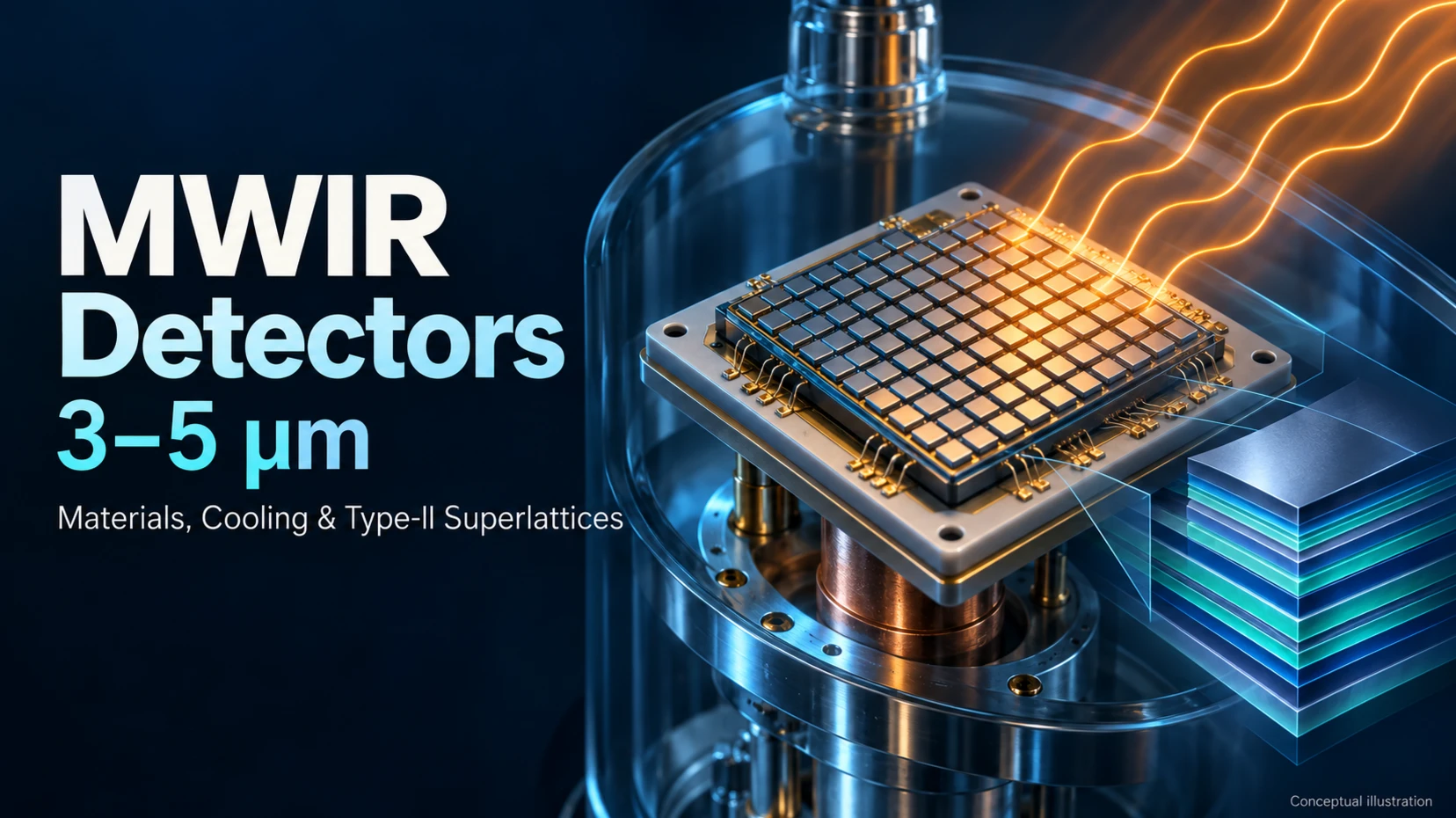
Which detector materials work in the 3–5 μm band | why high-performance MWIR detectors have to be cooled | how type-II superlattices differ from MCT | where the manufacturing difficulty sits, and which step gates yield.
Read the story
NEWSROOM
Company developments, technology explainers, event updates and engineering perspectives from GK Semiconductor.
Which detector materials work in the 3–5 μm band | why high-performance MWIR detectors have to be cooled | how type-II superlattices differ from MCT | where the manufacturing difficulty sits, and which step gates yield.
Read the story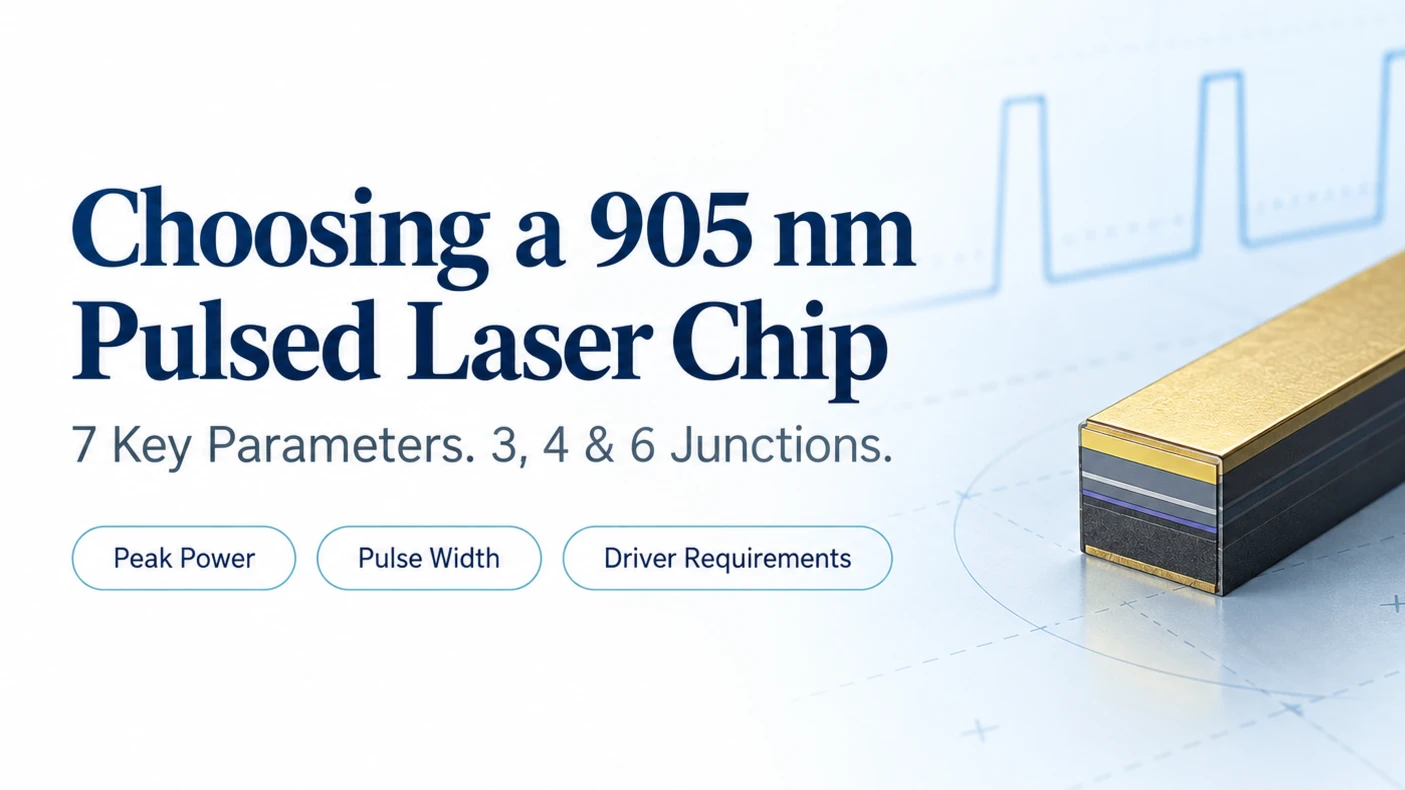
Choosing a 905 nm emitter chip comes down to matching seven core parameters to your system's optics and electronics, then selecting a triple-, quad-, or six-junction power tier that balances target range against driver complexity.
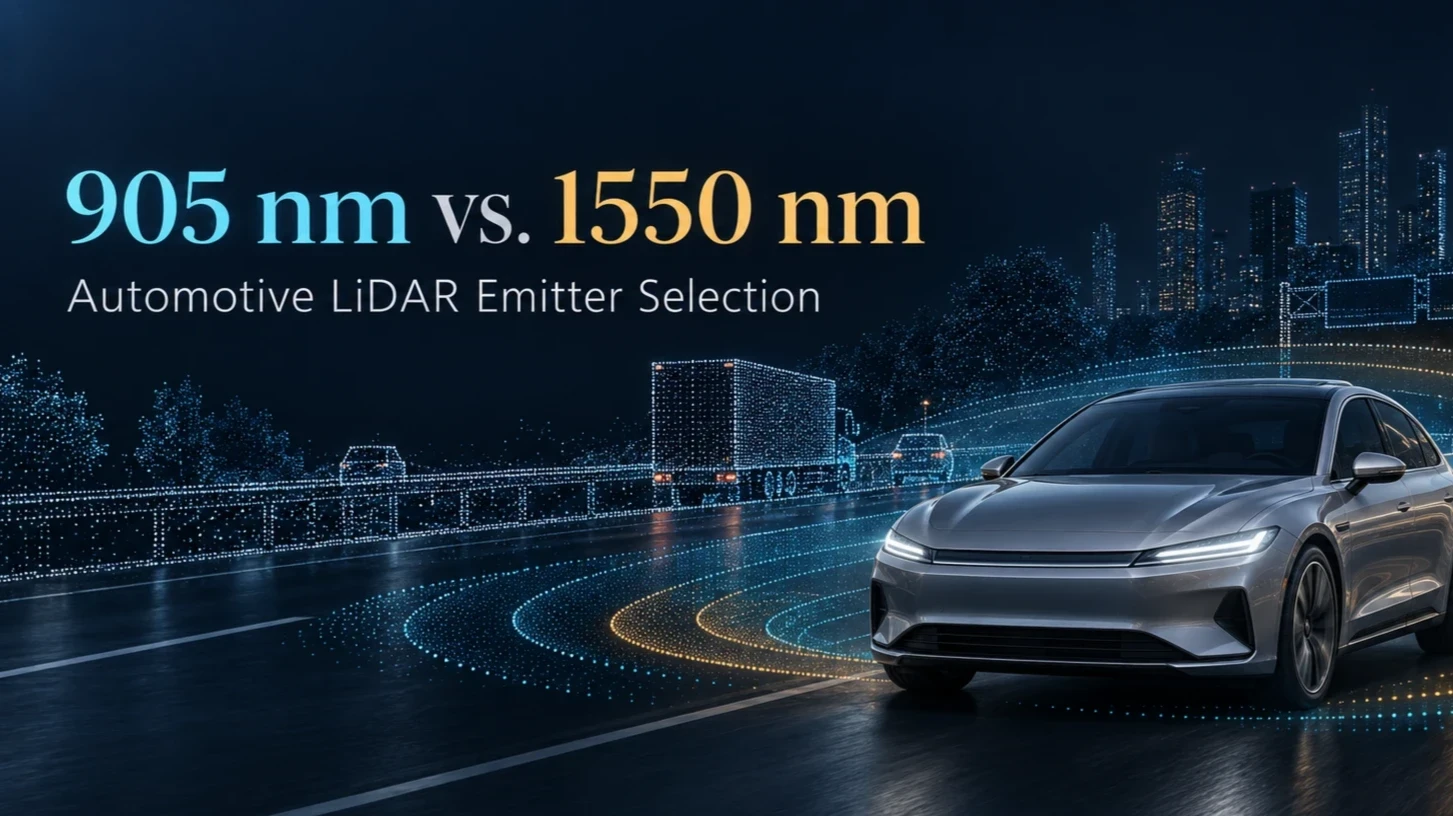
Automotive LiDAR transmitters divide into two camps: 905 nm, which offers a mature supply chain, low chip cost, and direct silicon detector compatibility; and 1550 nm, which allows higher eye-safe optical power at the cost of pricier components and greater architectural complexity. Because each suits different range, budget, and volume needs, defining four key parameters—target detection range, power and thermal budget, unit cost ceiling, and annual production volume—will naturally determine the right wavelength.
BROWSE BY CATEGORY
Explore company developments, technology insights and events from GK Semiconductor.